



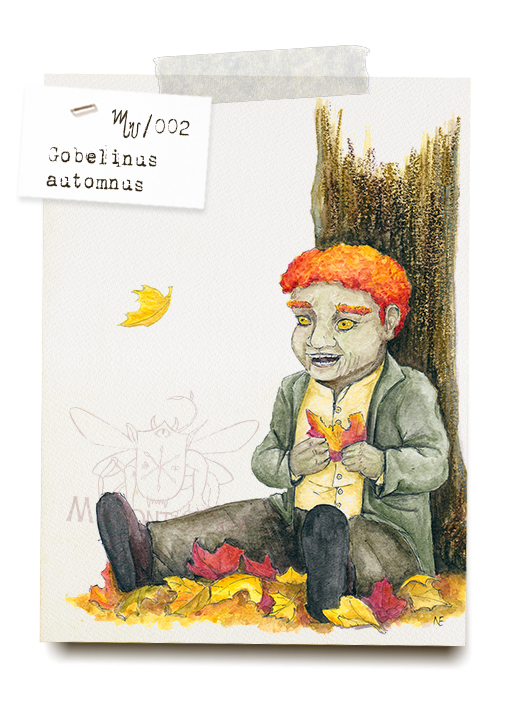
Gobelinus autumnus
(Autumn goblin)
Common names: foliage prancer, autumn joy, leaf muncher, “those damn kids!”
Basic Information:
Size: 100-120cm
Mass: 15-20kg
Lifespan: 150-170 years.
Taxonomy:
Magion - Sceletata - Gnomidae - Gobelinus - autumnus
Description:
Gobelinus autumnus have similar size and built to a young human child, but they tend to have a wider built, especially the shoulders and necks. They have light to mid-brown skin, often with a tinge of green, and large gold eyes, with the iris almost covering the whole eye. Their hair has bright colors, and often seems like ginger hair, but on closer look, it is a mix of different colors from bright yellow and orange to red and crimson. It tends to be curly and quite messy, often with some leaf and branches additions.
They usually wear human clothing, often a collection of items they have found (sometimes on laundry lines). Gobelinus autumnus are very active, and their clothing sometimes show wear-and-tear, but usually in quite good condition because they enjoy patching them up with colorful pieces of fabric that they find. Communities that live far from humans will sometimes use plants to weave clothing and sometimes forgo clothing completely. They are not sensitive to the cold, and having cloths is more about the fun colors. And the fun of finding them. Among goblins that live near human settlements it is not rare to find full school uniform outfits that they usually got by trading with human children.
Like many other goblin species, Gobelinus autumnus can become invisible. It is not clear how the effect is achieved, but it seems to affect an area rather than the body of the goblin, since their cloths become invisible as well. There have been cases when a goblin was able to hide a human child friend from sight as well.
Habitat:
Forests and woods are the natural habitat of Gobelinus autumnus, but they have been known to venture out to visit parks and the backyards of private homes, attracted by piles of leaves.
During summer and most of the spring Gobelinus autumnus live in underground caves. They despise heat, and therefore retire deep underground once temperatures rise, where they hibernate until temperatures regain the chill they prefer.
Diet:
Gobelinus autumnus eat mostly leaves, roots and berries, although they are known to eat the ocasional insect. They do not seem to like sweets very much, but will eat them if offered by a friend. Food, like most things, is something they believe should be enjoyed with friends. Their favorite snack is autumn leaves, especially bright yellow or red ones “before they get them brown spots”.
Habits & Culture:
Many assume that the Autumn goblins’ name come from their autumnal coloring, but in fact they they were named so because they wake from hibernation in autumn. As temperatures go down, they leave their underground hiding and look for deciduous trees and shrubs. There’s nothing they like more than a leafy snack after a good exertion of throwing leaves in the air or jumping into piles of leaves.

Preparing for a run in “pass under the leaves”
One of their traditional and most beloved games is “pass under the leaves”: one player throws a pile of leaves into the air, as high as they can, and then run under the leaves, trying to pass under as many of them as possible before they fall to the ground. The other players will stand around, counting the passed leaves loudly, sometimes purposely miscounting to confuse the other counting players. An important reminder that this game is not about winning, it’s about having fun with your companions, and making as much mess as possible. If the runner slips and falls face first into the leaves, it will be received with loud cheering and clapping. This may seem mean, but the falling goblin is allowed to eat all the leaves that stuck to its face, so falling on your face is actually considered a win.
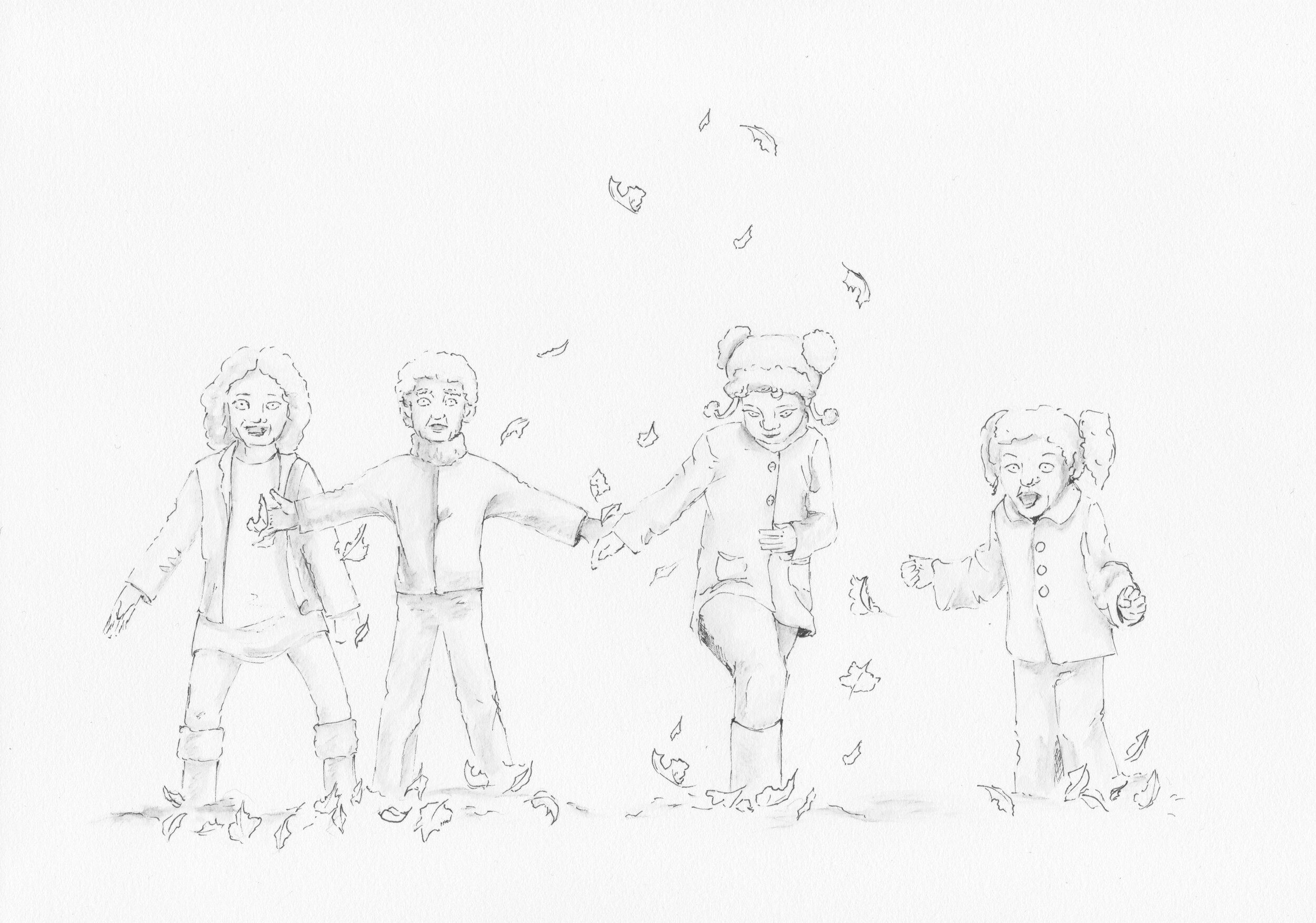
Gobelinus autumnus playing “pass under the leaves.”
A gathering of Gobelinus autumnus can be very loud, but they are not too concerned about attracting attention thanks to their innate ability to turn invisible, so if a human passes by, they can just disappear. Sometimes they have a whole game of “pass under the leaves” while invisible, apparently they find it hilarious to try and count the leaves when the runner is invisible. It is likely that this habit began several haunting rumors of forests and parks.
Gobelinus autumnus tend to be mischievous, they love to play and enjoy a good trick. Unlike some goblin species, however, Autumn goblins have no malevolent intent and genuinely just want to have fun and will never harm anyone on purpose.
They are aware that playing in the piles of leaves humans make in their backyard can lead to misunderstandings. If they are seen, their size and proportions often make adult humans assume that these are young children playing, and occasionally a child is blamed for the mess they have made.
When this happens, they will usually wait for the accuser to make another pile of leaves, and then have an invisible “pass under the leaves” tournament in a time the human child could not possibly participate, thus clearing the child’s name. This may have resulted in a few panic attacks, but really, humans shouldn’t be so scared of disembodied voices (“and that guy wasn’t any fun anyways”).
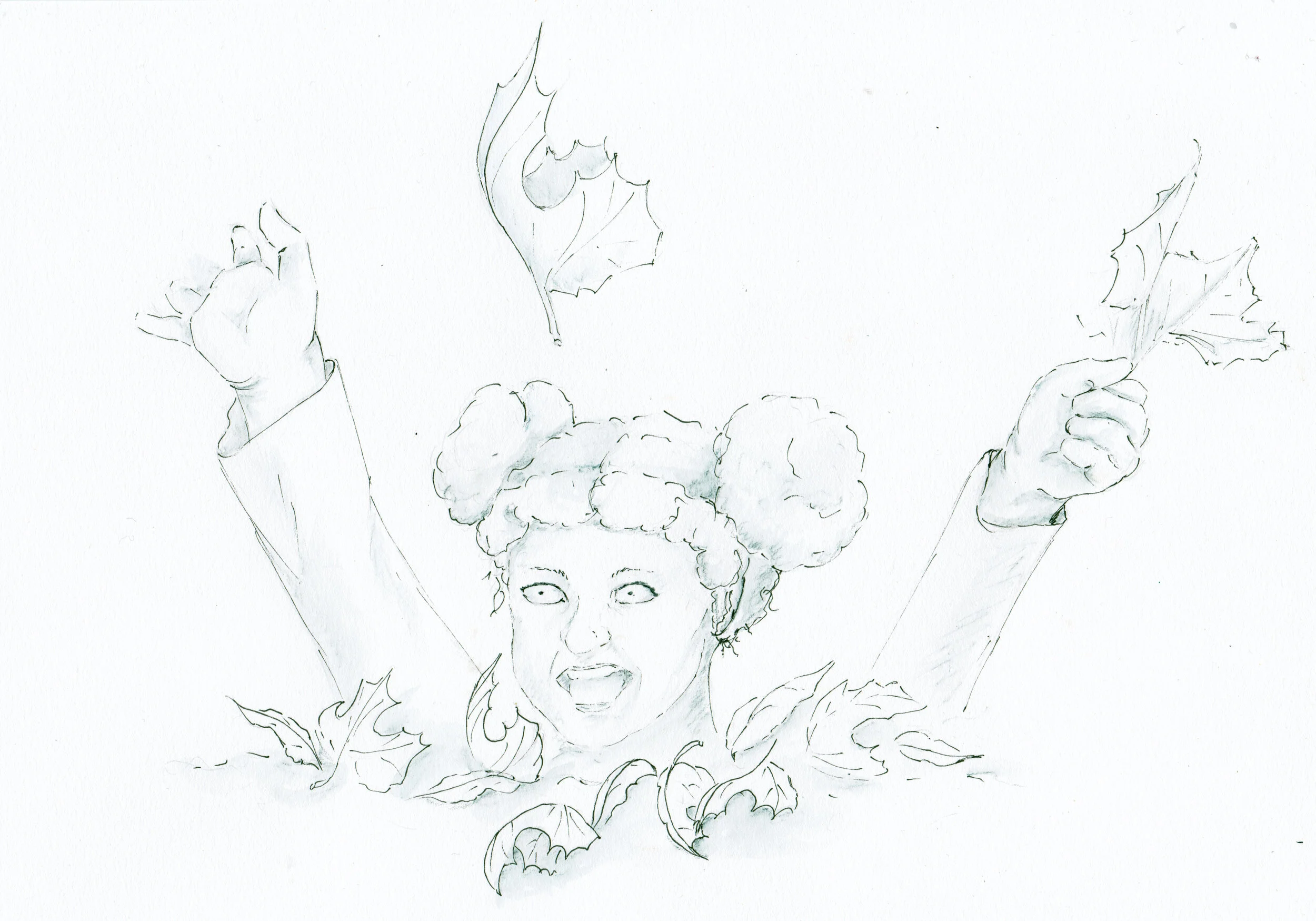
Gobelinus autumnus playing in a pile of leaves.
Gobelinus autunmus feel a certain affinity to human children, because they too love to play. Being of similar size to the goblins, and generally more open than adults to different appearances and to the idea of magic, made children much more approachable. Gobelinus autunmus have learned to avoid adult humans, who tend to respond to the goblins’ appearance with fear or disgust (“so rude!”), but some autumn goblins develop close friendships with human children. It usually only lasts a few years, and then the child grows and starts talking about them as “that imaginary friend I had”. It does hurt some, but the goblins understand that it’s just part of life, and “humans are very weird after all.”