



Crepertilio ungulatus
(Hooved dusk-dweller)
Other names: creepers, urban gremlins

Introduction video about the Crepertilio ungulatus
Basic Information:
Size: 90-115cm height
Mass: 13-18kg
Lifespan: 80-90 years
Taxonomy:
Magion - Mixturidae - crepertilio - ungulatus
Description:
Crepertilio ungulatus are of the larger Dusk-dwellers (Crepertili) subgroup, with an average height of about a meter. About half of this height is their long slender legs. The legs are similar to flamingo legs, not only in their general look, but also in having a so-called 'locking mechanism' in the joints which allows the Crepertilio ungulatus to comfortably stand on one leg for a long period of time. The flamingo-like leg structure is common among crepertili, but Crepertilio ungulatus is unique in having hooved feet. It is thought that the hooves were developed in relation to the original habitat of Crepertilio ungulatus of savannas and steppe environments.
Crepertilio ungulatus share many physical traits with other crepertili: round face with large rounded ears and slightly bulging very large eyes. A short snout with a rather large nose and a wide mouth with two protruding teeth, known as the “puncture-teeth”.
Crepertilio ungulatus leg bone structure.
Their jaws are uniquely structured to accommodate the puncture-teeth, so that they can lay comfortably on the lower lip when the mouth is closed. The puncture-teeth do give crepertili a threatening visage and their bite can certainly cause damage, but their main function is to cut through the skin of fruits and vegetables to reach the juice. Crepertilio ungulatus do bare their impressive teeth in threatening situations in order to deter predators, often coupled with a low rumbling growl. They have long learned that this method of defense, while useful with predator animals, is highly problematic with humans.
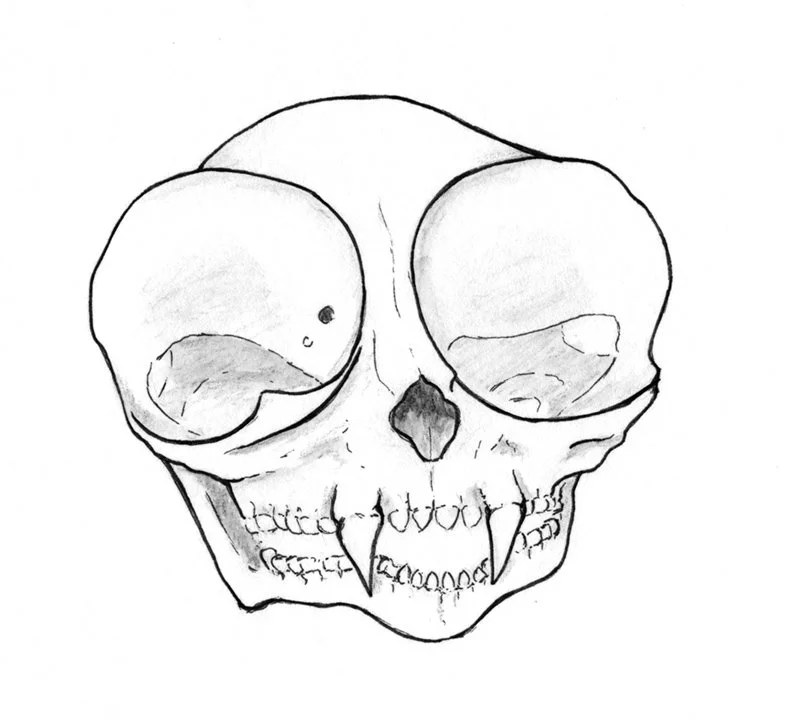
Crepertilio ungulatus skull.
Crepertili are egg laying mamals, and many assume they have genetic relation to monotremes. The eggs are about 4-5 cm in diameter when they are laid, but grow in size to 20-25 cm before hatching. The eggs have a light-brown coloring with slightly darker spotting and a leathery exterior. Crepertilio ungulatus females will usually lay two eggs, but it is not uncommon to have a single egg and there are known rare cases of three. The eggs develop in utero for 23-25 days, with additional 56-63 days of external incubation after being laid.
The body is covered with thick brown-grey fur, except for the legs and palms. Crepertilio ungulatus hands have five fairly long and dexterous fingers. They have a long tail, covered with very short hairs but ending with a fluffy tuft. The tail is used for balancing, especially during fast runs.
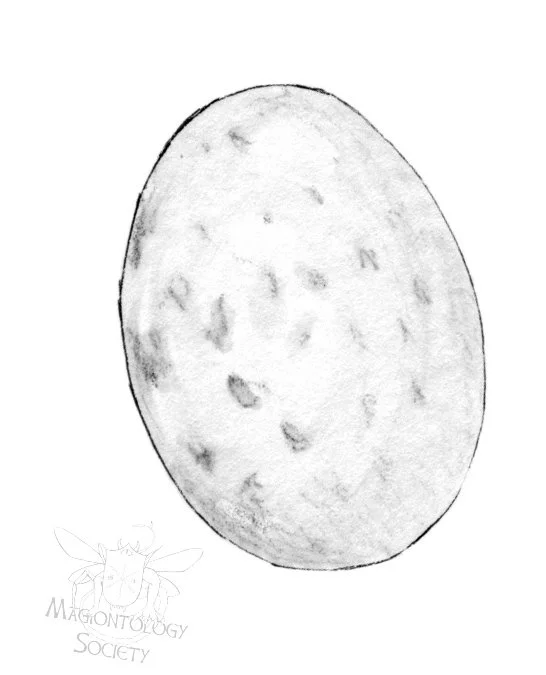
Crepertilio ungulatus egg.
The younglings hatch with the aid of two egg-teeth that will later develop into the puncture teeth. Crepertilio ungulatus hatchlings are only 30-40cm tall and covered with plumage-like fuzz. They can walk almost immediately, but are very vulnerable and usually kept at home for at least 7-10 months, while they grow in size and replace the hatchling-fluff with the familiar thick fur. The initial growth of the younglings is very quick, but is slowed down after the first year and on average, Crepertilio ungulatus reach their adult size at about 15 years old.
Habitat:
The original habitat of Crepertilio ungulatus was in flatlands and savanna climates, well fitted with their long hooved legs. However, like other crepertili, they have discovered the comforts of human technology and began to live in small communities on the edges of human settlements already centuries back. Most prefer smaller towns that are flanked by woods or mountains, where they can enjoy the inventions of humans while remaining safely out of their domain. However, there are known Crepertilio ungulatus communities within large cities, usually in enclosed parks or cemeteries that are left empty at night, but may be located at the heart of the city.
Diet:
Crepertilio ungulatus are omnivorous. Much of their diet is fruit and vegetable based, but they do hunt at times, mostly small mamals and insects. They cook their foods, much like humans, and the more urban Crepertilio ungulatus are known to utilize foods from human markets and stores.
Habits & Culture:
Crepertilio ungulatus live in small communities, usually consisting of 20 to 30 members, that are referred to as a stand or a clop. These communities are essentially large families, supporting each other and raising their young together. Some communities settle in woodlands or mountains, distancing themselves from human settlements, but nowadays most Crepertilio ungulatus communities can be found just on the edge of human civilization.
The majority of Crepertilio ungulatus live on the outskirts of small towns, making use of human technology while keeping a safe distance. However, a growing number on Crepertilio ungulatus communities find spaces within large cities: parks, abandoned houses and cemeteries. These urban communities are always ready to move, aware of the dangers of discovery, but enjoy the benefits large cities can provide, from foods and furnishing to sneaking into theaters.
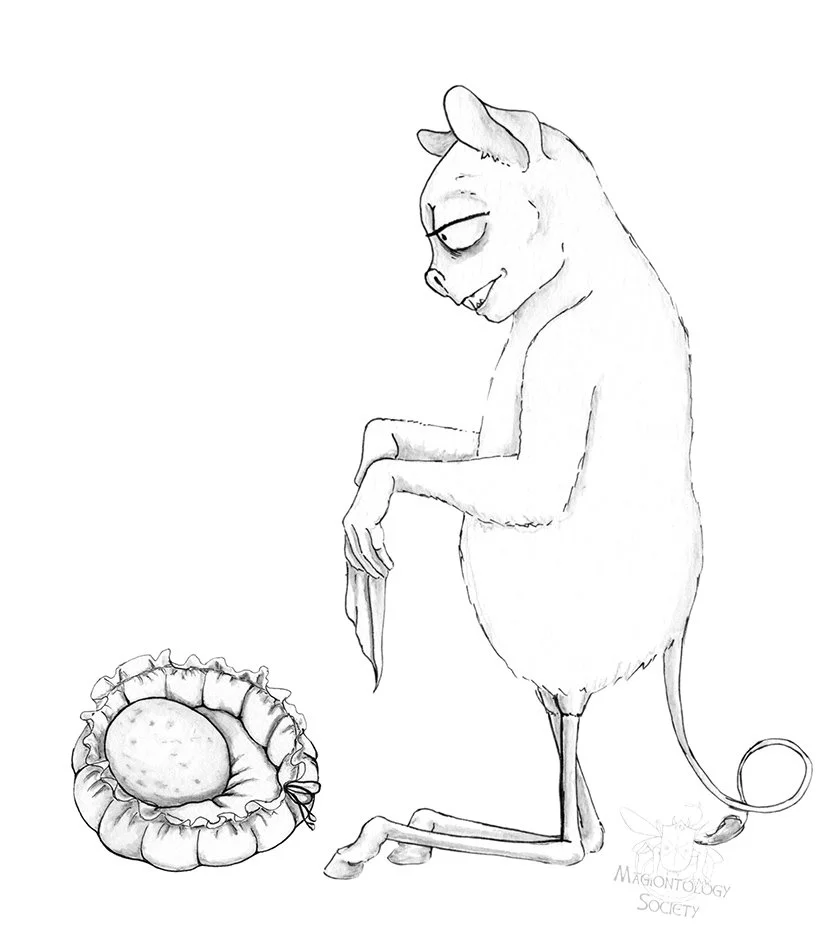
Crepertilio ungulatus mother with her egg.
Pet beds, specifically heated ones, were adapted as egg-beds.
Urban communities often consist of younger Crepertilio ungulatus, excited to learn more human technologies. In many cases, as they grow older they grow tired of the constant moving to escape human eyes and choose to leave the high density urban areas in favor of quieter towns, but taking with them all that they have learned to improve their quality of life.
Crepertilio ungulatus are generally curious and adventurous folk, with a strong tendency for invention and exploration. Their communities are well connected, and often trade inventions and information. Many have learned to use human communication systems, from mores to WiFi and can keep in touch quite easily.

Crepertilio ungulatus enjoying a cuppa.
It is very common for young Crepertilio ungulatus to set out to visit other communities upon reaching adulthood, usually between 19-21 years old. The young Crepertilio ungulatus will often spend about a decade traveling, visiting other communities, learning and exploring. The traveling tradition is partly in order to strengthen inter-clop relationships and trade, but also an opportunity for the traveling Crepertilio ungulatus to find a partner. Communities are very small, and are often extended families, with the young raised as brothers and sisters, so many of them prefer to settle down elsewhere.
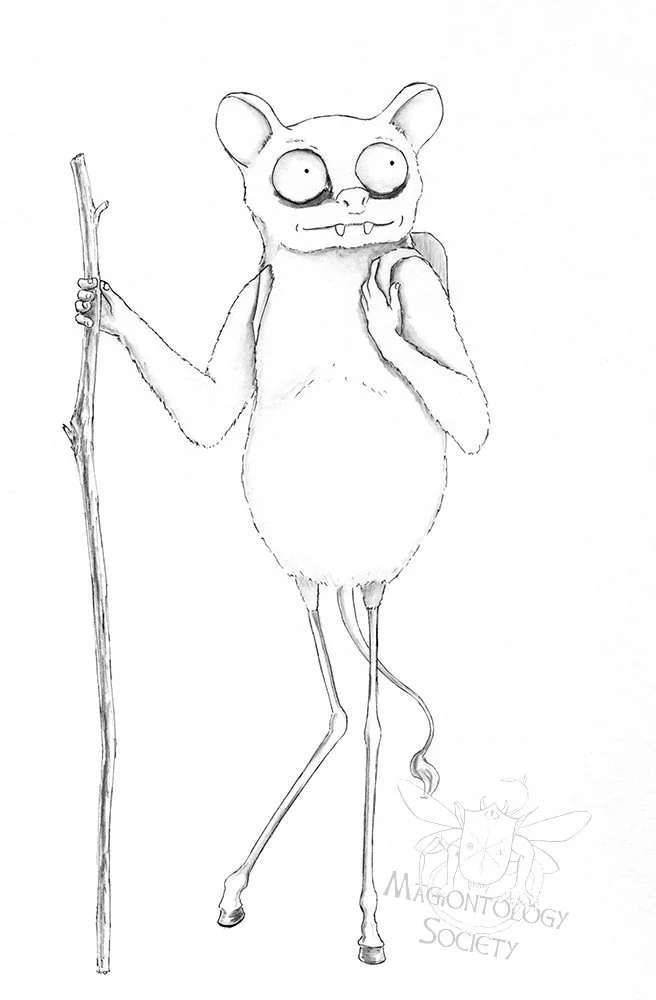
Young Crepertilio ungulatus traveler.
Crepertilio ungulatus have a long and unhappy history with humans. Their sharp teeth, hooved feet and affinity with darkness made many humans associate them with demons and monsters. In the past, they were also hunted down, for fur and supposed magical properties of their puncture teeth and hooves. They do not hold a grudge, in fact they mostly find humans fascinating, and in rare cases have been known to befriend them. But in general, they prefer their safety and are clever enough to keep to the shadows where they can prosper, just beyond human perception.