







Draco foliāla

Leafwing dragon

(bark drake, sleep dragon)

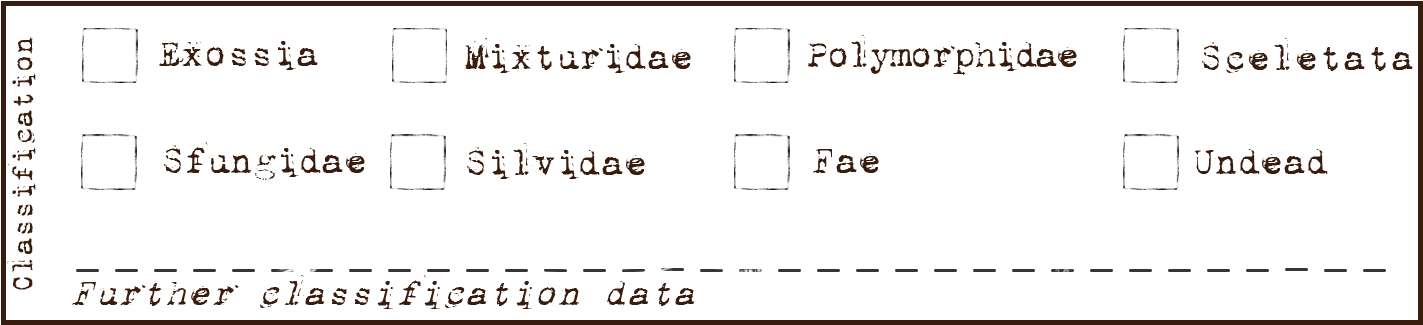
Sqamidae - draconidae
X
17-20cm

Insectivores.

Forests and woods.

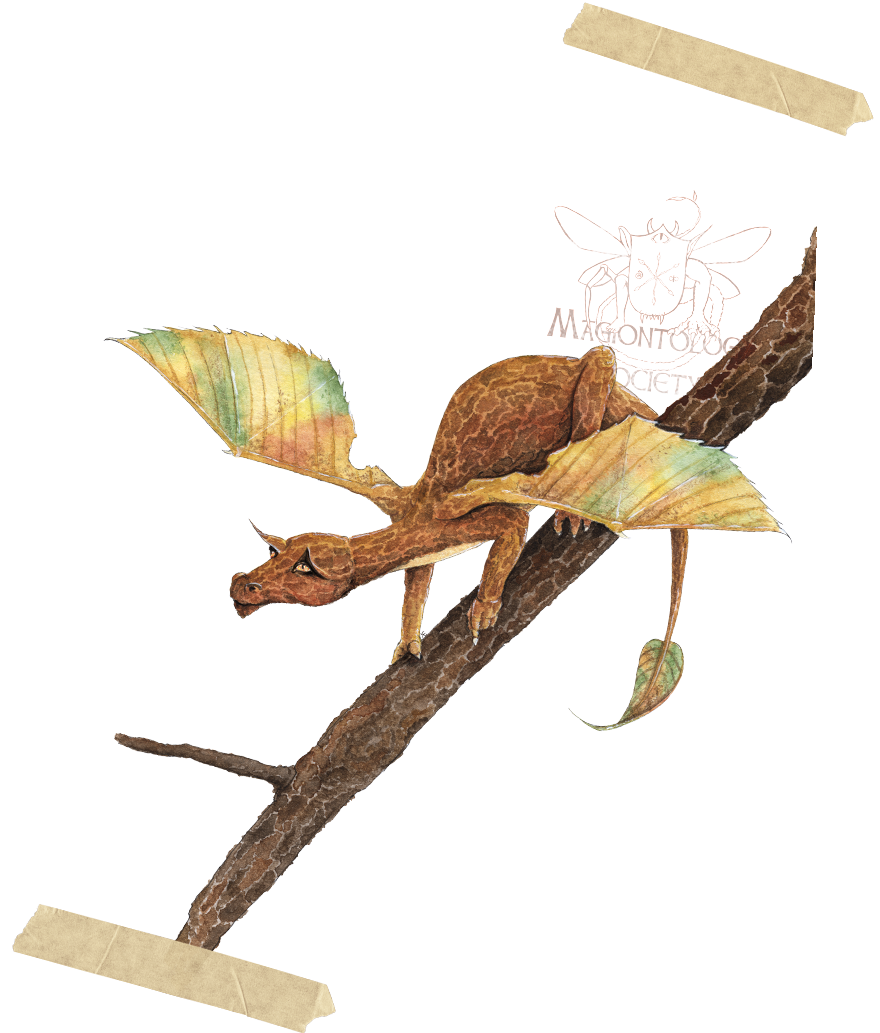
Have bark-like scale pattern, and their wings and tip tail imitate leaves.
Very hard to detect due to their camouflage and high intelligence, but can understand and respond to speaking.
Enjoy basking in sunspots, especially on cold days.

Their tail-sting venom is not very strong, but can be dangerous for humans if stung by multiple dragons.
Their stun-breath can daze a human. However, approaching masked can raise suspicion of hunting and cause attacks.



Draco foliāla are of the few remaining dragons in our world. They are very small, and their camouflage makes them nearly impossible to detect, particularly if they are trying to avoid you. They are highly intelligent, and communicate in their own language. Many can understand human language (which language depends on their area of living), but prefer not (and at times blatantly refuse) to speak it. Like most draconidae, Draco foliāla distrust and avoid humans (they would respond better to magions and even magic-folk), but they have been known to respond to humans if the case is well presented (provided they understand the language).
Draco foliāla are expert hunters, using their leaf camouflage to trap insects. Their colouring already makes them nearly invisible in their environment, and they can bring their wings together to create the illusion of a large dry leaf, hiding them further. When their prey nears, they catch it with their sharp claws and use the sharp poisonous sting at the end of their leaf-shaped tail to kill it. Their stun-breath is mainly used for defense, but can be used for a particularly large prey. They are known to enjoy berries and other fruits, and have been seen trapping small mammals or fish, if a waterbody is nearby, but favour insects.

